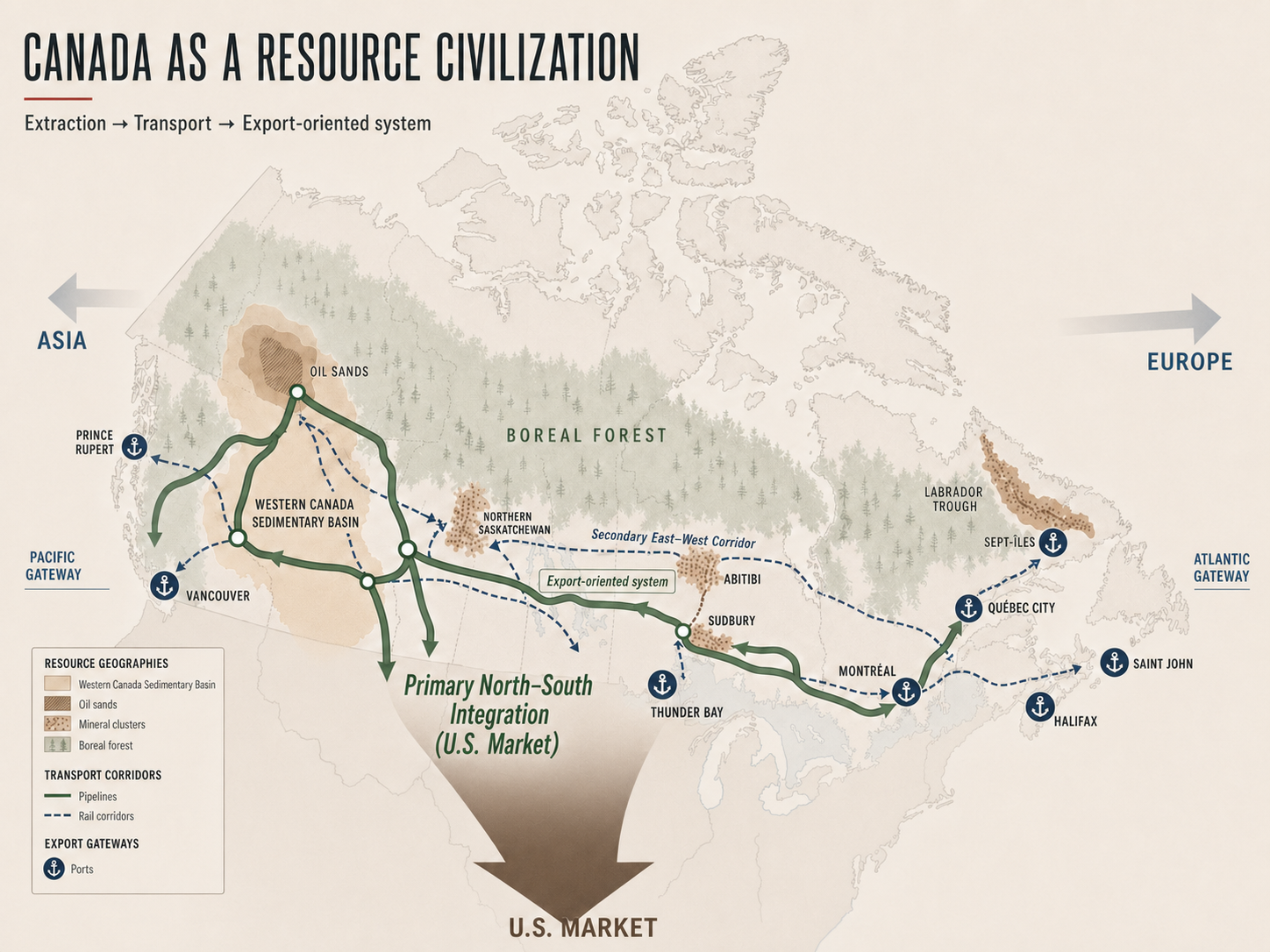
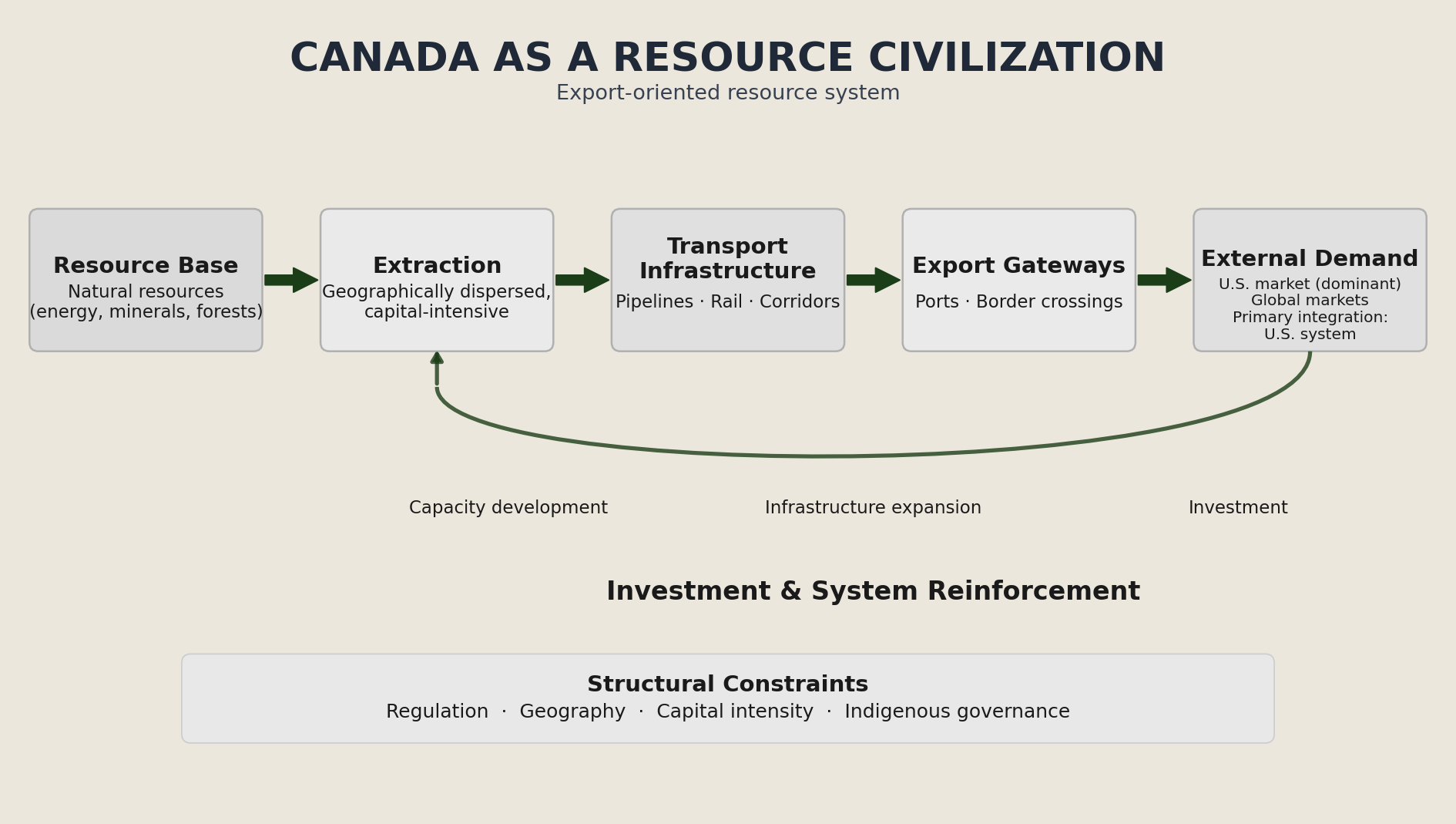
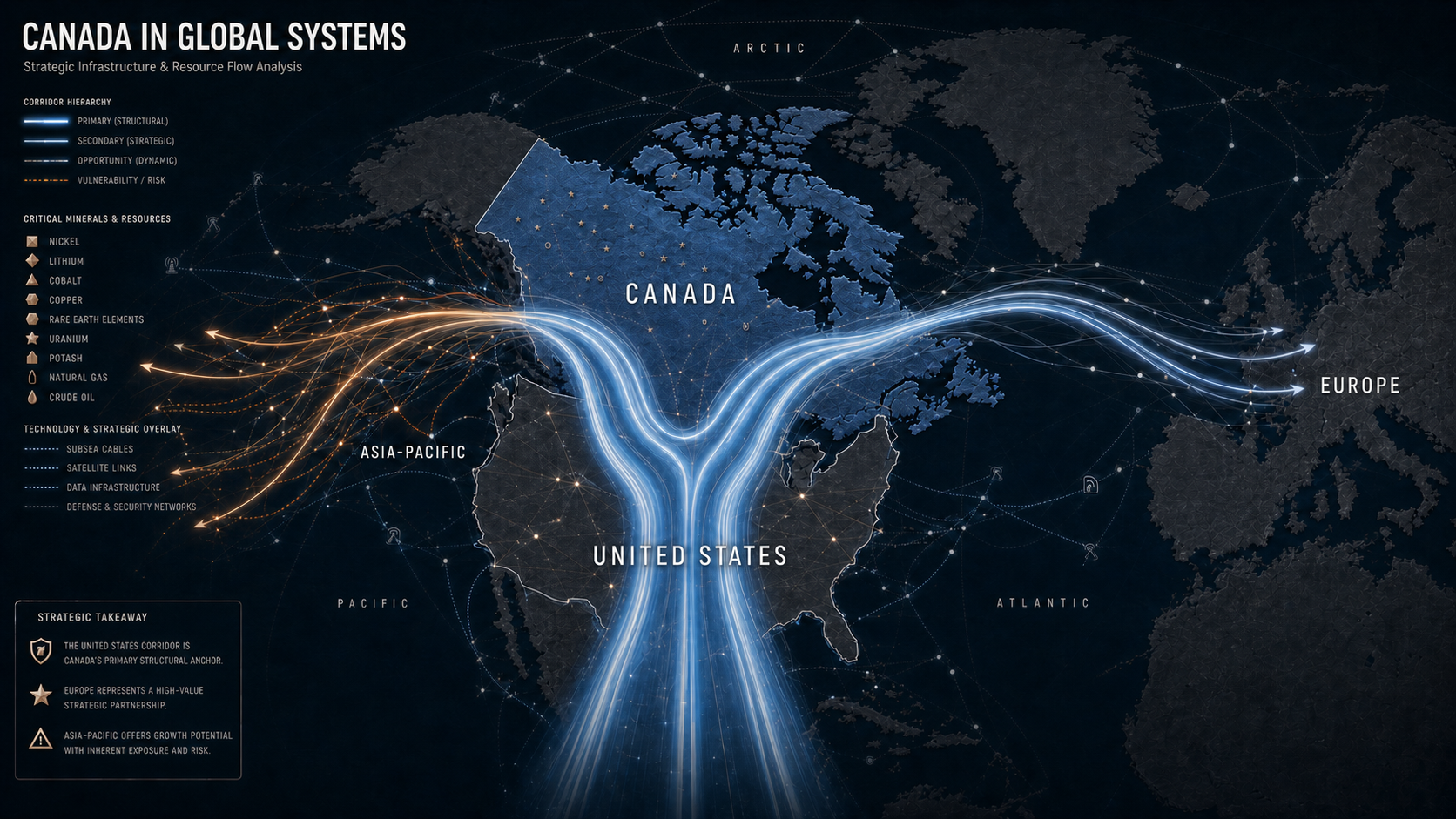
Canada's development has long depended on the ability to organize immense and geographically dispersed resource spaces into export-oriented economic corridors connected to external industrial markets. This is not simply a matter of endowment. It reflects a specific political economy: one in which geography produced a structural logic of extraction, transport, and external demand that shaped institutions, infrastructure, and territorial organization over successive generations.
A resource economy produces commodities. A resource civilization is organized around them. That distinction matters because it reframes the analytical question. Canada's strategic relevance is not a recent discovery. But it is being revalued: by the energy transition shifting demand toward electrification and low-carbon systems, by the growing centrality of critical minerals to industrial and technological supply chains, and by geopolitical fragmentation that is placing renewed emphasis on the reliability, proximity, and political alignment of supplier states. This reading extends the staples-thesis tradition in Canadian political economy (Innis, 1930; Watkins, 1963), which interpreted Canada's development through its successive resource exports.
Understanding Canada through this lens — as a resource civilization — is the starting point for understanding its current position and future trajectory.